
How to Plan Jyotirlinga Darshan in Maharashtra?
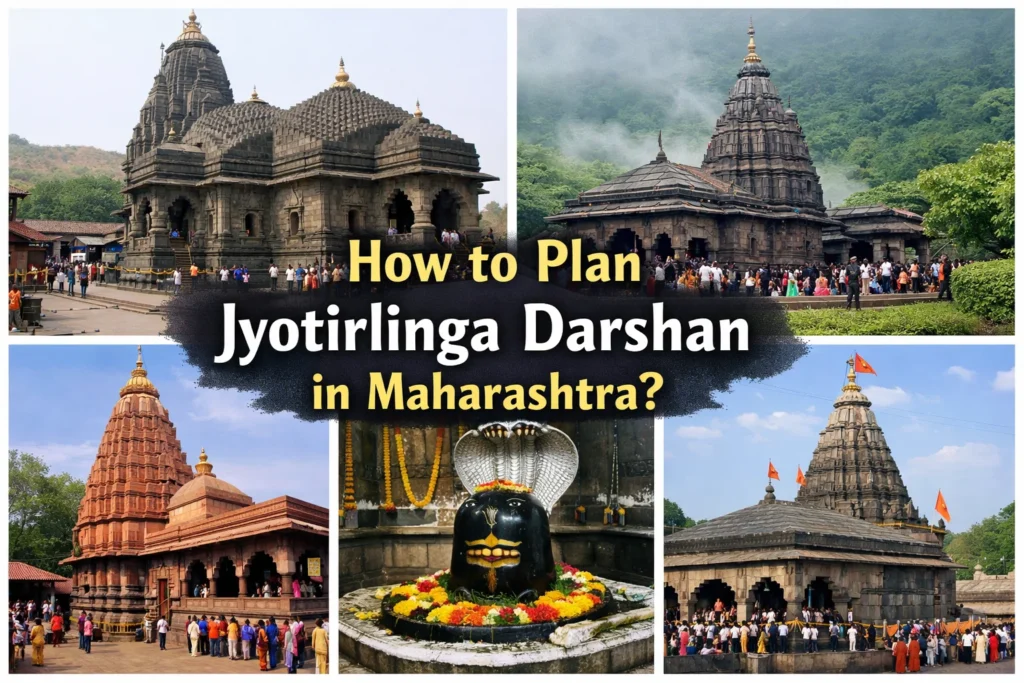
How to Plan Jyotirlinga Darshan in Maharashtra? If you have ever wanted to do Jyotirlinga darshan, Maharashtra is one of the best places to start. Why? Because out of the 12 Jyotirlingas in all of India, 5 are located right here in Maharashtra. That is almost half of them in one single state. For any Shiva devotee, this is truly a blessing.
At Travel Shrine, we have helped many people plan their pilgrimage trips, and we know how confusing it can get — which temple to visit first, how far are they from each other, what is the best time to go, and how much will it cost. This guide answers all of that in simple, easy language so that anyone can plan their Jyotirlinga yatra in Maharashtra without any stress.
Let’s get started.
What is a Jyotirlinga?
Before planning the trip, it helps to understand what a Jyotirlinga actually is. In Hindu belief, Lord Shiva appeared as a column of light (Jyoti = light, Linga = symbol) at 12 sacred places on Earth. These 12 places are called Jyotirlingas, and visiting all of them is considered one of the most sacred things a devotee can do in their lifetime.
Darshan at these temples is not just a religious ritual — for many people, it is a deeply personal and emotional experience. People come with prayers, with gratitude, and sometimes just with a heavy heart looking for peace.
5 Jyotirlingas in Maharashtra – Quick Overview
Here is a simple table showing all 5 Jyotirlingas located in Maharashtra:
| # | Jyotirlinga Name | Location | District | Distance from Mumbai |
|---|---|---|---|---|
| 1 | Trimbakeshwar | Trimbak | Nashik | ~170 km |
| 2 | Bhimashankar | Bhimashankar | Pune | ~110 km |
| 3 | Grishneshwar | Verul (near Ellora) | Aurangabad | ~340 km |
| 4 | Aundha Nagnath | Aundha | Hingoli | ~550 km |
| 5 | Parli Vaijnath | Parli | Beed | ~480 km |
These five temples are spread across different parts of Maharashtra, so good planning is needed to cover all of them in one trip.
Best Time to Visit Jyotirlingas in Maharashtra
The best time to visit is between October and March. The weather is cool and comfortable during these months, which makes long travel and temple visits much easier.
| Season | Months | Is it Good to Visit? |
|---|---|---|
| Winter | October – February | ✅ Best time – cool weather |
| Spring | March – April | ✅ Good, slightly warm |
| Summer | May – June | ❌ Very hot, avoid if possible |
| Monsoon | July – September | ⚠️ Bhimashankar is beautiful but roads can be risky |
Special tip from Travel Shrine: If you want to visit during Mahashivratri, be ready for huge crowds at every temple. It is a wonderful experience but book everything — hotels, trains, transport — at least 2 to 3 months in advance.
How Many Days Do You Need for 5 Jyotirlingas in Maharashtra?
If you want to cover all 5 Jyotirlingas in one trip, you should plan for at least 7 to 10 days. This gives you enough time to travel comfortably, rest, and do proper darshan at each temple without rushing.
If you can only take a shorter trip, you can split it into two visits:
Trip 1 (3-4 days): Trimbakeshwar + Bhimashankar + Grishneshwar Trip 2 (3-4 days): Aundha Nagnath + Parli Vaijnath
Route for Jyotirlinga Darshan in Maharashtra
Here is a simple route that Travel Shrine recommends. This route is planned to reduce travel time and make the yatra smooth:
Starting Point: Mumbai or Pune
Day 1-2: Trimbakeshwar (Nashik) Start your yatra from Trimbakeshwar, which is about 170 km from Mumbai and very well connected by road and train (Nashik Road station). The temple is dedicated to Lord Trimbakeshwar and sits near the origin of the Godavari river. The atmosphere here is very peaceful and the architecture of the temple is beautiful. Darshan timings are usually 5:30 AM to 9:00 PM. Try to reach early morning for the best experience.
Day 3-4: Bhimashankar (Pune district) From Nashik, you can head towards Bhimashankar, which is about 200 km away. Bhimashankar is located inside a forest and wildlife sanctuary, which makes it one of the most scenic Jyotirlingas in India. The drive through the ghats is lovely. Keep some extra time because the road journey takes 4 to 5 hours from Nashik. The temple opens at 4:30 AM for darshan.
Day 5-6: Grishneshwar (Aurangabad/Chhatrapati Sambhajinagar) From Bhimashankar, head to Grishneshwar near Ellora Caves. This is also a great chance to visit the famous Ellora Caves, which are just 1 km away from the temple. Grishneshwar is the last (12th) Jyotirlinga in order and holds special religious importance. The temple is compact but beautifully built in South Indian style. Try to visit Ellora Caves the same day to save time.
Day 7-8: Aundha Nagnath (Hingoli) From Aurangabad, take a road trip to Aundha Nagnath in Hingoli district. It is around 270 km. This is considered the first among all 12 Jyotirlingas by some religious texts. The temple is ancient and not as crowded as others, which gives you a more quiet darshan experience. Hingoli is a small town, so book your stay in advance as options are limited.
And Last Day 9-10: Parli Vaijnath (Beed) The last stop on this circuit is Parli Vaijnath, which is about 130 km from Aundha Nagnath. This temple is known for its grand architecture. There is also a hot water kund (tank) near the temple. The nearest railway station is Parli Vaijnath itself, so reaching here by train is very easy.
Travel Tips from Travel Shrine
Here are some real and useful tips that we always share with our yatris:
Book hotels in advance. Small towns like Aundha and Parli have limited hotel options. If you go without booking, you may struggle to find a decent place to stay.
Carry cash. Many small towns near these temples do not have many ATMs. Keep enough cash with you, especially for local transport and prasad.
Dress modestly. All Jyotirlinga temples have a dress code. Wear traditional or decent clothing. Avoid shorts and sleeveless outfits. Some temples may ask you to wear a dhoti or saree.
Keep your ID proof. Some temples require ID for special pujas or VIP darshan. Always keep an Aadhaar card or any government ID with you.
Start darshan early. Every temple is less crowded in the early morning. If you want a peaceful darshan and good photographs, reach the temple before sunrise.
Hire a local guide. At places like Grishneshwar and Trimbakeshwar, a local guide can tell you so much about the temple history and rituals. It is worth the small fee.
Estimated Budget for Jyotirlinga Darshan in Maharashtra
Here is a rough budget estimate for one person for a 7-10 day trip:
| Expense Category | Estimated Cost (per person) |
|---|---|
| Train/Bus Travel | ₹2,000 – ₹5,000 |
| Local Transport (taxi/auto) | ₹3,000 – ₹6,000 |
| Hotel Stay (budget) | ₹5,000 – ₹8,000 |
| Food | ₹2,000 – ₹4,000 |
| Temple Donations & Puja | ₹1,000 – ₹3,000 |
| Miscellaneous | ₹1,000 – ₹2,000 |
| Total Estimate | ₹14,000 – ₹28,000 |
This is a budget estimate. If you travel by car with family and share costs, it can come down further. Luxury options will cost more.
How to Reach Maharashtra for Jyotirlinga Yatra
By Air: Mumbai, Pune, and Aurangabad have airports. You can fly in and start your yatra from any of these cities.
By Train: All major Jyotirlinga locations are connected by train — either directly or to a nearby station. Nashik Road, Bhimashankar (Karjat is the nearest station), Aurangabad, Hingoli, and Parli Vaijnath all have good train connectivity.
By Road: If you prefer road travel, hiring a cab for the entire yatra is a very popular and comfortable option. You can book a round trip cab from Mumbai or Pune and the driver will take you to all 5 temples. This is especially convenient for senior citizens and families.
Darshan Timings at a Glance
| Temple | Opening Time | Closing Time | Best Darshan Time |
|---|---|---|---|
| Trimbakeshwar | 5:30 AM | 9:00 PM | 5:30 – 7:00 AM |
| Bhimashankar | 4:30 AM | 9:30 PM | 4:30 – 6:30 AM |
| Grishneshwar | 5:30 AM | 9:30 PM | 5:30 – 7:00 AM |
| Aundha Nagnath | 5:00 AM | 9:00 PM | 5:00 – 7:00 AM |
| Parli Vaijnath | 5:00 AM | 9:00 PM | 5:00 – 7:00 AM |
Note: Timings may change on festival days. Always check with the temple trust before visiting.
Places to Visit Near Jyotirlingas in Maharashtra
While doing your yatra, you can also visit these nearby attractions:
- Trimbakeshwar — Sula Vineyards, Pandavleni Caves, Nashik city, Tapovan
- Bhimashankar — Bhimashankar Wildlife Sanctuary, Shidi Ghat viewpoint
- Grishneshwar — Ellora Caves (UNESCO World Heritage Site), Daulatabad Fort, Aurangabad Caves
- Aundha Nagnath — Nanded (Hazur Sahib Gurudwara is nearby)
- Parli Vaijnath — Parli town market, local temples
A Note from Travel Shrine
We at Travel Shrine believe that a pilgrimage is not just about visiting temples. It is about the journey, the people you meet, the food you eat at a small dhaba on the highway, the cold early morning at a temple gate, and the silence you feel inside when you finally stand before the Jyotirlinga. That feeling is hard to describe in words.
Whether you are a first-time pilgrim or someone who has done this yatra before, Maharashtra’s Jyotirlingas will always have something new to offer you. Plan well, travel smart, and go with an open heart.
If you need help planning your Jyotirlinga yatra in Maharashtra, Travel Shrine is always here to guide you.
Frequently Asked Questions (FAQs)
Q1. Can I cover all 5 Jyotirlingas in Maharashtra in 5 days?
It is possible but very tiring. We suggest at least 7 days for a comfortable and meaningful trip.
Q2. Which is the most difficult Jyotirlinga to reach in Maharashtra?
Bhimashankar is the most remote one, located in hilly forest area. Roads can be challenging but the journey is very beautiful.
Q3. Is Maharashtra Jyotirlinga yatra good for senior citizens?
Yes, but we recommend hiring a private cab and booking good accommodation in advance. Early morning darshan works best to avoid crowds.
Q4. What is the nearest airport for Grishneshwar?
Aurangabad Airport (now Chhatrapati Sambhajinagar Airport) is the nearest, just about 30 km away.
Q5. Do we need to book darshan tickets online?
Most temples allow free darshan without booking. However, for special pujas like Abhishek or Rudrabhishek, you can book online or at the temple counter directly.