
5 Places to Visit in Chardham Yatra

If you have ever thought about doing something truly meaningful in your life, Chardham Yatra is one of those experiences that stays with you forever. At Travel Shrine, we have helped thousands of pilgrims and travelers plan this sacred journey, and every single time, we see people come back changed — more peaceful, more grateful, and more connected to something bigger than themselves.
Chardham Yatra is one of the most important pilgrimages in Hindu religion. It covers four holy shrines located in the state of Uttarakhand, India. These four places are Yamunotri, Gangotri, Kedarnath, and Badrinath. Together, they sit high up in the Himalayas, and visiting all four is believed to wash away all sins and help a person reach moksha (freedom from the cycle of birth and death).
The word “Char” means four, and “Dham” means holy place or abode. So Chardham simply means four holy abodes.
But here is something many people ask us — is Chardham only four places? The answer is yes and no. Along with the four main dhams, there is also Haridwar, the gateway city, which plays a very important role in the yatra. That is why we are covering 5 places in this guide — the four sacred dhams plus Haridwar, which is where most people begin and end their journey.
Let us take you through each place, one by one.
Why Chardham Yatra Matters
Before we get into the details, let us be honest with you. This is not just a sightseeing trip. It is a physically demanding, emotionally moving, and spiritually powerful journey. The temples are located at very high altitudes. The roads are narrow mountain paths. The weather can change fast.
But every bit of difficulty is worth it.
Millions of devotees do this yatra every year. Some are old, some are young. Some walk alone, some go with family. No matter who you are or where you are from, the feeling of standing in front of these ancient temples, surrounded by the Himalayas, is something no words can fully describe.
5 Places to Visit in Chardham Yatra
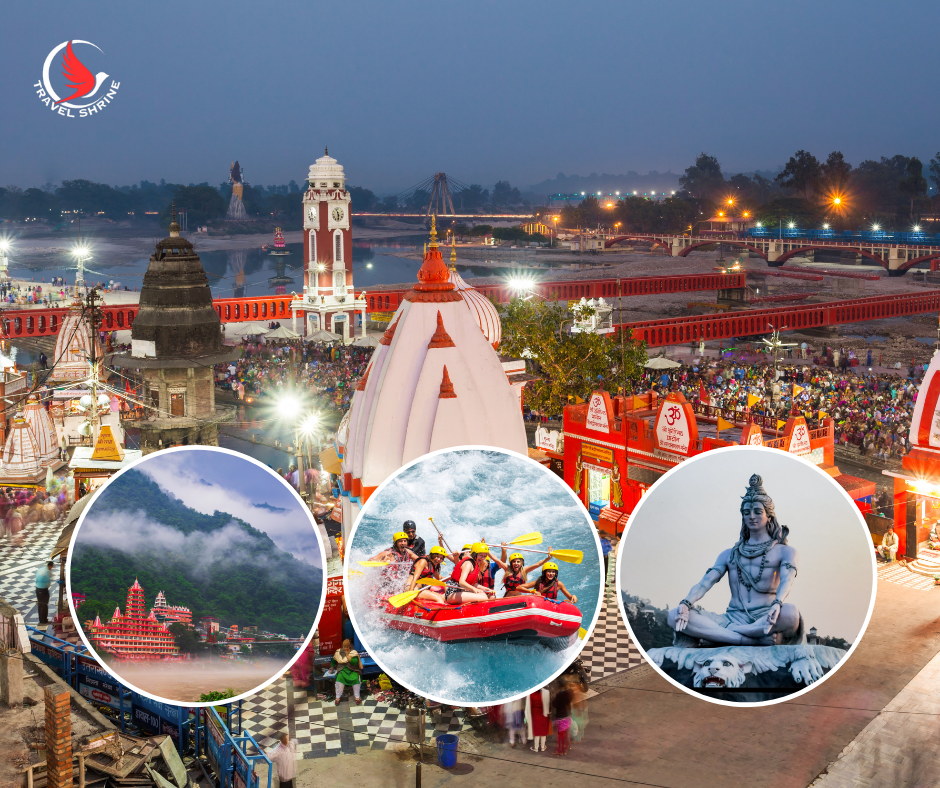
Place 1: Haridwar – The Gateway to Chardham Yatra
Altitude: 314 meters above sea level Distance from Delhi: ~220 km Best Time to Visit: April to June, September to November
Haridwar is not one of the four official Chardham shrines, but it is the heart of the entire yatra. Almost every Chardham Yatra begins from Haridwar. This city sits at the point where the holy Ganges river comes down from the mountains into the plains.
The name “Haridwar” means “Gateway to God” — and that is exactly what it feels like.
When we at Travel Shrine send our guests to Haridwar before their yatra begins, the most common thing they tell us is: “We did not expect to feel this way just from standing at the ghat.” That is the magic of Haridwar.
What to do in Haridwar:
The most famous experience here is the Ganga Aarti at Har Ki Pauri. Every evening, priests perform a beautiful ritual with fire lamps on the banks of the Ganges. The whole area lights up. People offer flowers and lamps to the river. The sound of bells and chants fills the air.
You should also take a dip in the Ganges here. The water is cold and clean, and for pilgrims, it holds deep religious meaning.
Other places to visit include Mansa Devi Temple (reached by cable car), Chandi Devi Temple, and the many ashrams in the area.

Place 2: Yamunotri – The First Dham
Altitude: 3,293 meters above sea level Distance from Haridwar: ~220 km (then a 6 km trek) Best Time to Visit: May to June, September to November Dedicated to: Goddess Yamuna
Yamunotri is the first stop in the Chardham Yatra, and it is where the sacred Yamuna river begins. The temple here is dedicated to Goddess Yamuna, the daughter of the Sun God.
Getting to Yamunotri is an adventure in itself. You drive to a place called Janki Chatti, and from there, you trek about 6 km uphill to reach the temple. The path goes through forests and alongside streams. It is not the easiest walk, but it is absolutely beautiful.
What makes Yamunotri special:
Near the temple, there is a natural hot water spring called Surya Kund. Pilgrims cook rice and potatoes in this hot spring and then offer it to the goddess. This is a tradition that has been going on for generations. The water in Surya Kund is so hot that it can cook food in minutes.
There is also a rock called Divya Shila that devotees worship before entering the main temple.
The Yamunotri Temple was built in the 19th century by Maharaja Pratap Shah of Tehri Garhwal. Though simple in structure, the atmosphere around it is deeply peaceful and sacred.
| Feature | Details |
|---|---|
| River origin | Yamuna River |
| Trek distance | 6 km from Janki Chatti |
| Hot spring | Surya Kund (near boiling point) |
| Temple built by | Maharaja Pratap Shah |
| Best months | May–June, Sept–Nov |
Place 3: Gangotri – The Second Dham
Altitude: 3,415 meters above sea level Distance from Haridwar: ~280 km Best Time to Visit: May to June, October Dedicated to: Goddess Ganga
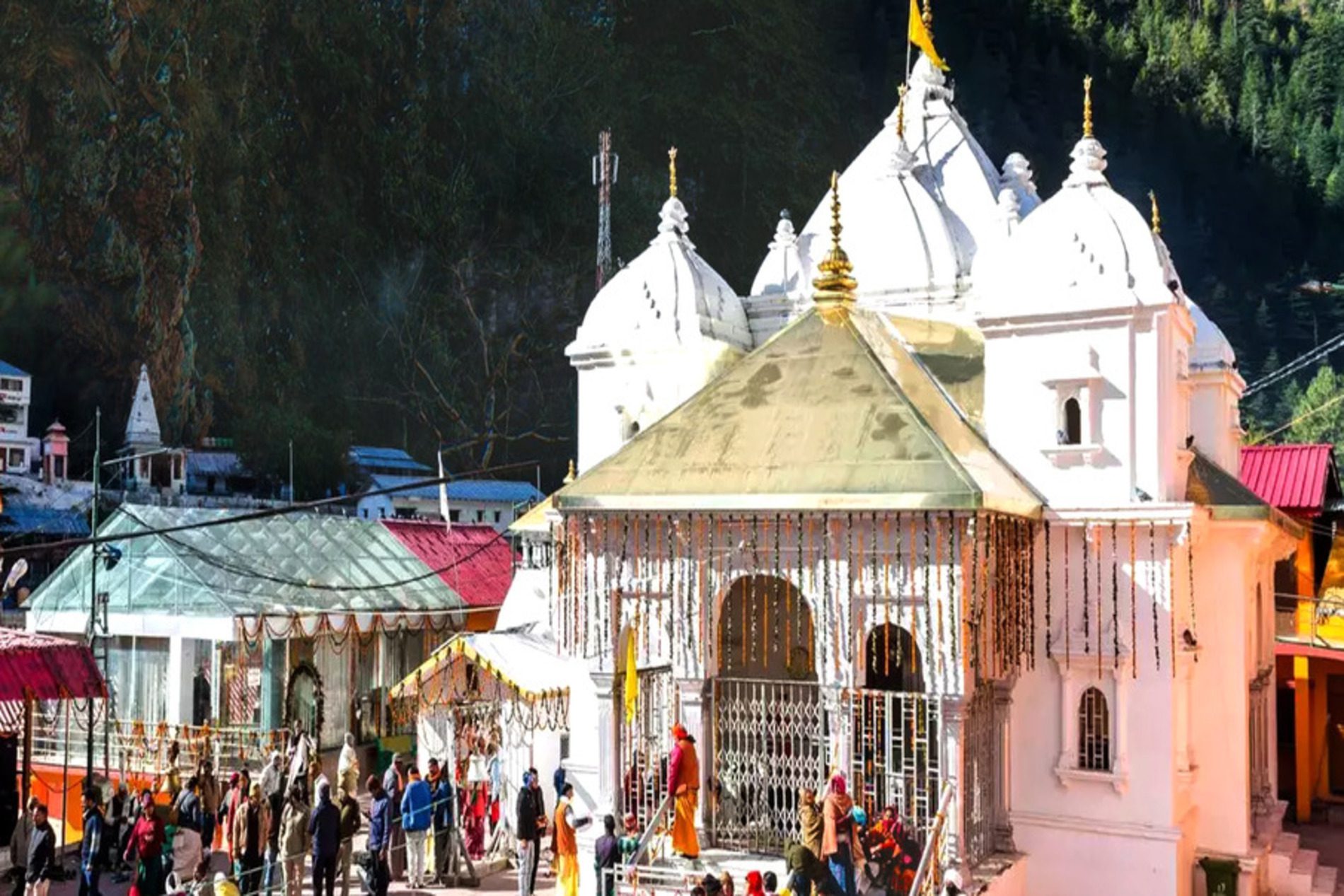
Gangotri is one of the most breathtaking places you will ever see in your life. This is where the holy Ganges river, known here as the Bhagirathi, is believed to have descended from heaven to earth.
The Gangotri Temple, built by a Gorkha commander named Amar Singh Thapa in the 18th century, stands right on the banks of the Bhagirathi river. The sound of the river combined with the cold mountain air makes this place feel completely out of the ordinary world.
Important fact: The actual source of the Ganges is the Gangotri Glacier, located about 19 km from the temple at a place called Gaumukh (meaning “mouth of the cow”). The glacier looks like the mouth of a cow, and from here, the icy water flows down to form the river. Trekking to Gaumukh is a separate trek that serious pilgrims and adventure lovers do.
What to do at Gangotri:
Take a holy dip in the Bhagirathi river at the Brahma Kund ghat near the temple. The water is extremely cold, but pilgrims do it with full devotion. Attend the morning and evening aarti at the temple — it is a moving experience.
| Feature | Details |
|---|---|
| River | Bhagirathi (Ganges) |
| Glacier Source | Gangotri Glacier, 19 km away |
| Temple built by | Amar Singh Thapa |
| Altitude | 3,415 m |
| Nearest town | Uttarkashi (100 km) |
Place 4: Kedarnath – The Third Dham
Altitude: 3,583 meters above sea level Distance from Haridwar: ~260 km to Gaurikund, then 18 km trek or helicopter Best Time to Visit: May to June, September to October Dedicated to: Lord Shiva
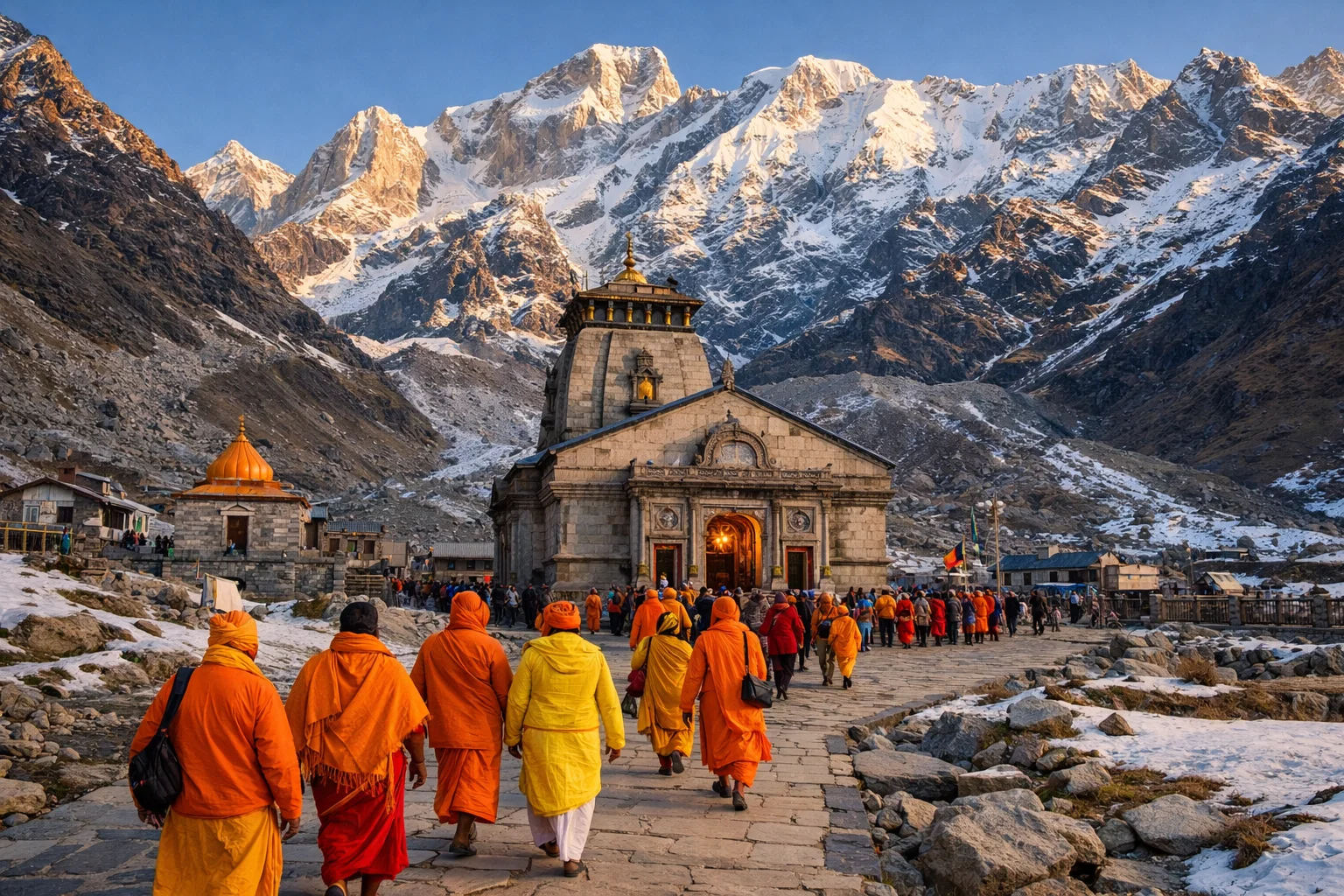
If there is one place in the entire Chardham Yatra that people talk about with the most emotion, it is Kedarnath. This temple dedicated to Lord Shiva is one of the twelve Jyotirlingas — the most sacred Shiva shrines in India.
The temple is ancient. Historians believe the current stone structure was built over 1,000 years ago, and it has survived floods, earthquakes, and avalanches. In 2013, the entire region was hit by a devastating flood. Almost everything around the temple was destroyed — but the temple itself stood untouched. For millions of people, this is proof of its divine power.
Getting to Kedarnath:
You drive to Gaurikund and then trek 18 km uphill to the temple. This is the hardest part of the Chardham Yatra. The trail is steep and can be cold, muddy, or icy depending on the season. But palki (palanquin), horses, and porters are available if you need help. There is also a helicopter service from Phata or Guptkashi if you cannot trek.
What to do at Kedarnath:
The main attraction is obviously the temple itself. The early morning darshan (viewing of the deity) is a very special experience. The image of Lord Shiva here is in a triangular stone form, and devotees touch and offer ghee to it.
The view from Kedarnath — surrounded by peaks like Kedardome and Sumeru — is something that will stay in your memory forever.
| Feature | Details |
|---|---|
| Type of shrine | One of 12 Jyotirlingas |
| Trek distance | 18 km from Gaurikund |
| Helicopter available | Yes, from Phata/Guptkashi |
| Temple material | Stone (very ancient) |
| Opens | April/May (after Akshaya Tritiya) |
Place 5: Badrinath – The Fourth and Final Dham
Altitude: 3,133 meters above sea level Distance from Haridwar: ~320 km Best Time to Visit: May to June, September to November Dedicated to: Lord Vishnu (Badri Narayan)
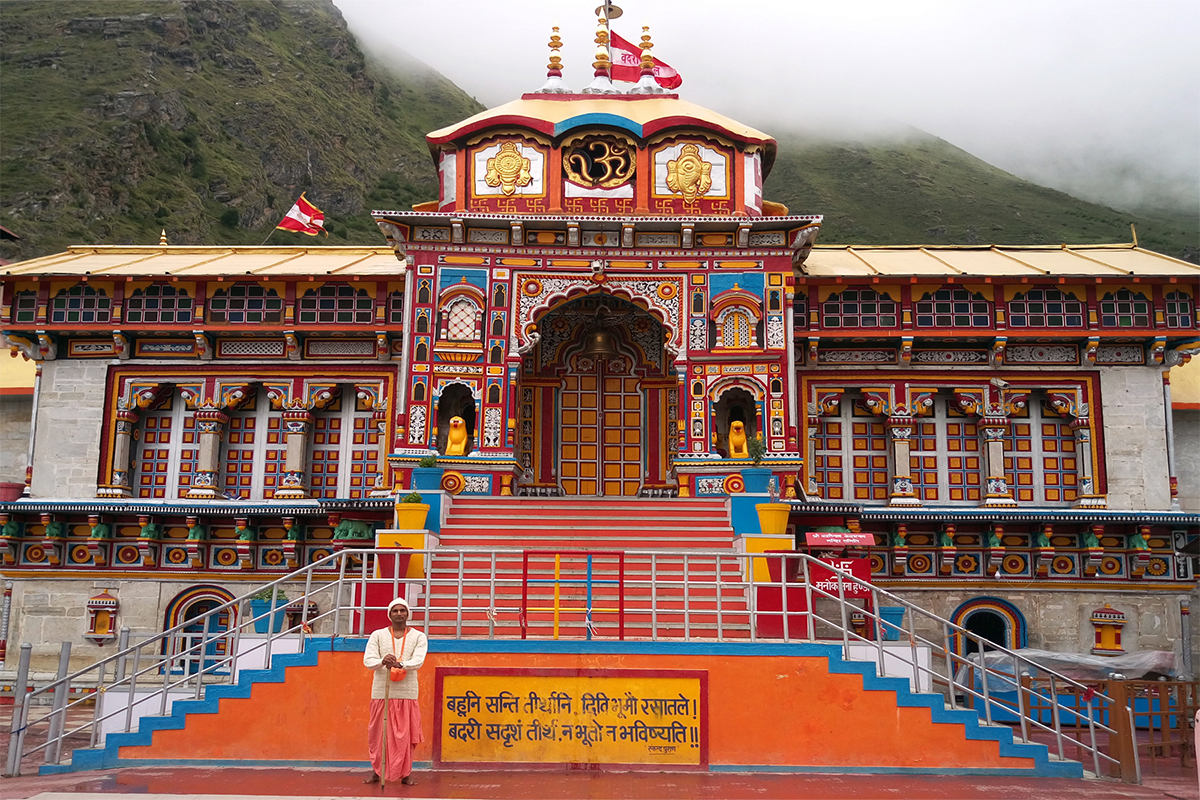
Badrinath is the fourth and final stop in the Chardham Yatra, and it is the one that gives the yatra its spiritual completion. This temple is dedicated to Lord Vishnu in his form as Badri Narayan.
Unlike the other dhams which are more remote, Badrinath is accessible by road all the way up to the temple. This makes it a bit easier to reach, but it is still at high altitude, and altitude sickness is a real concern.
The temple itself is gorgeous. Painted in bright colors, it stands out against the grey mountain backdrop in a way that is both surprising and beautiful. It sits near the Alaknanda River, and behind it rises the great peak of Neelkanth, often called the Queen of Garhwal.
Tapt Kund – The Hot Spring:
Right next to the temple is a natural hot sulfur spring called Tapt Kund. Devotees take a dip here before entering the temple. Despite the freezing temperatures all around, the spring stays warm throughout the year.
Mana Village:
About 3 km from Badrinath is Mana Village, which is officially the last village of India before the Tibet border. It is a unique cultural stop. You can visit Vyas Gufa (the cave where sage Vyas is said to have written the Mahabharata) and Bhim Pul, a natural rock bridge over the roaring Saraswati river.
| Feature | Details |
|---|---|
| Deity | Lord Vishnu (Badri Narayan) |
| Hot spring | Tapt Kund (near the temple) |
| Nearby attraction | Mana Village, Vyas Gufa |
| River nearby | Alaknanda |
| Background peak | Neelkanth (6,596 m) |
Complete Chardham Yatra Overview Table
| Dham | Deity | Altitude | Trek Required | Best Month |
|---|---|---|---|---|
| Haridwar (Gateway) | Goddess Ganga | 314 m | No | Year-round |
| Yamunotri | Goddess Yamuna | 3,293 m | Yes (6 km) | May–June, Sept–Oct |
| Gangotri | Goddess Ganga | 3,415 m | No | May–June, October |
| Kedarnath | Lord Shiva | 3,583 m | Yes (18 km) | May–June, Sept–Oct |
| Badrinath | Lord Vishnu | 3,133 m | No | May–June, Sept–Nov |
Best Time to Do Chardham Yatra
The Chardham temples open every year in April or May (after the auspicious day of Akshaya Tritiya) and close in October or November (on Diwali or shortly after). During winter, the entire region gets covered in heavy snow and the temples close for the season.
Best months: May–June and September–October
May and June are peak season. September and October are less crowded and have cleaner weather after the monsoon.
Avoid: July and August. This is monsoon season. Landslides and road closures are common and can make the journey dangerous.
How Long Does Chardham Yatra Take?
Most people complete the full Chardham Yatra in 10 to 12 days. If you want to take it slow and spend more time at each place, 14 to 16 days is a better plan.
Here is a simple suggested itinerary:
- Day 1–2: Haridwar / Rishikesh
- Day 3–4: Yamunotri
- Day 5–6: Gangotri
- Day 7–9: Kedarnath
- Day 10–12: Badrinath
- Day 13: Return to Haridwar / Rishikesh / Delhi
Tips from Travel Shrine for a Smooth Yatra
We have been helping pilgrims plan this trip for years. Here are some honest, practical tips:
Health comes first. Get a full health checkup before you go, especially if you are above 50 years of age or have heart or breathing conditions. High altitude affects everyone differently.
Carry warm clothes even in summer. At 3,000+ meters, even June mornings can be very cold.
Start early each day. Mountain weather turns bad in the afternoon. Start your travel or treks by 6 or 7 AM.
Book accommodation in advance. During peak season, hotels near the temples get full very fast.
Stay hydrated. At high altitude, your body loses water faster. Drink water regularly but avoid cold water or cold drinks.
Respect the environment. These places are sacred and also environmentally sensitive. Do not litter. Do not play loud music on the trails.
Take altitude sickness seriously. If you feel dizzy, have a bad headache, or cannot breathe properly — stop, rest, and if needed, go back down. Your health is more important than completing the yatra.
Final Words on 5 Places to Visit in Chardham Yatra from Travel Shrine
Chardham Yatra is not just a trip. It is one of the most meaningful things you can do in your lifetime. Whether you are going for spiritual reasons, to connect with nature, or simply because you love mountains and ancient places — this journey will give you more than you expect.
At Travel Shrine, we have seen people arrive tired and anxious, and leave feeling like a weight has been lifted from their shoulders. That is the power of these four sacred places.
If you are planning your Chardham Yatra, we are here to help you every step of the way — from route planning and hotel bookings to helicopter packages and customized itineraries.
Start your journey. The mountains are waiting.