51 Shakti Peethas in India
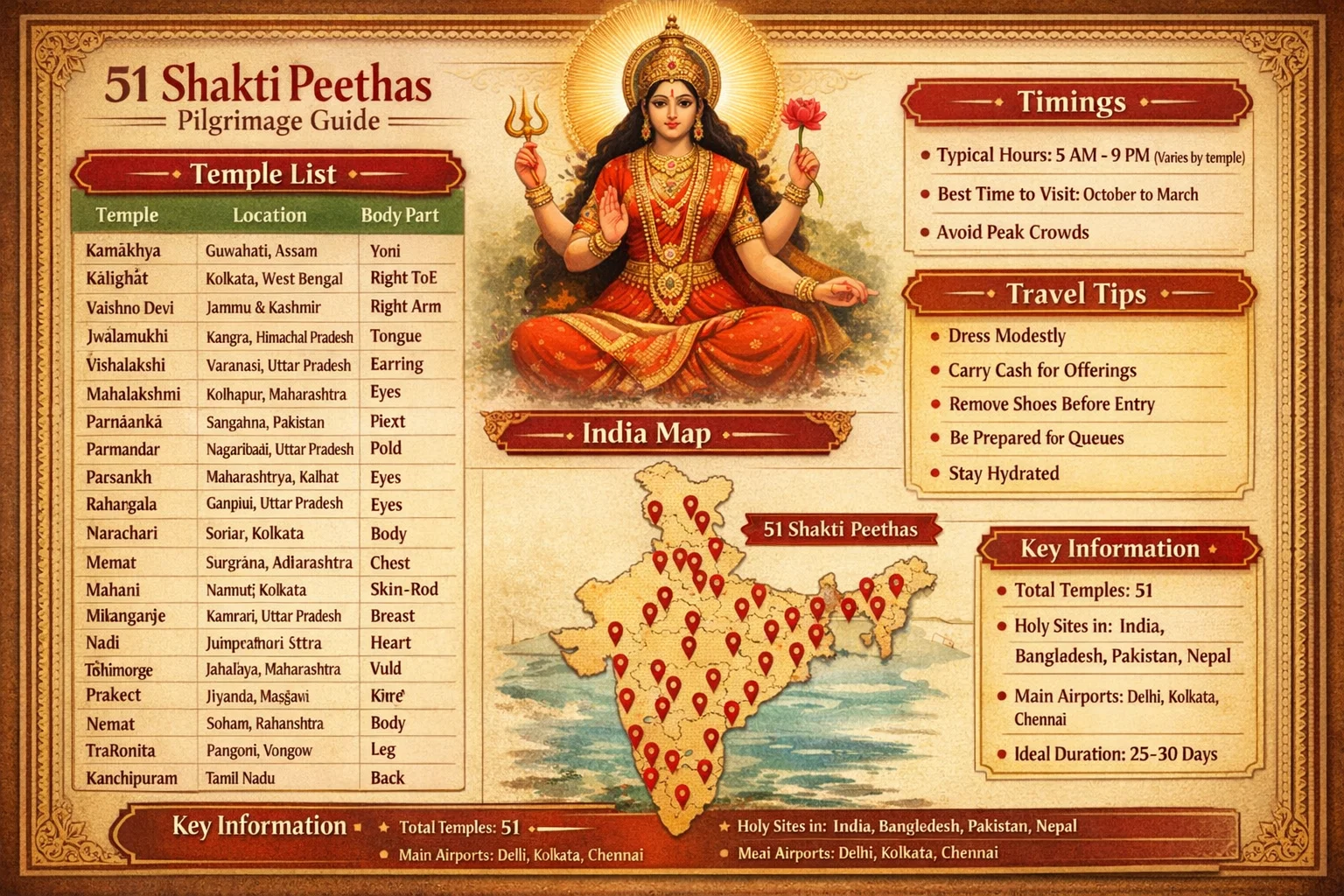
The 51 Shakti Peethas in India include famous temples like Kamakhya, Jwala Ji, and many other ancient holy sites where different forms of Goddess Shakti are prayed to. These are the places where the body parts or jewels of Goddess Sati fell to the earth, and temples were built at each spot. Every pilgrimage site has its own story and special meaning, and all of them are considered very holy by devotees. Since these places are connected to the body of Goddess Sati, they are full of divine energy.
Each sacred site shows a different form of Goddess Shakti. These places are also seen as symbols of the union of Shakti and Shiva. They hold the highest spiritual importance in the Tantra and Shakti traditions.
51 Shakti Peethas List with Locations & Body Parts
| No. | Shakti Peeth | Location (State) | Body Part / Ornament | Temple Timings |
|---|---|---|---|---|
| 1 | Amarnath | Jammu & Kashmir | Throat | 6 am to 6 pm |
| 2 | Jwalaji | Himachal Pradesh | Tongue | 5 am to 8 pm |
| 3 | Katyayani | Mathura, Uttar Pradesh | Hair | 5:30 am to 10 pm |
| 4 | Maa Taratarini | Odisha | Breast | 5:30 am to 10 pm |
| 5 | Lalita | Allahabad, Uttar Pradesh | Fingers | 5 am to 9 pm |
| 6 | Tripurmalini | Jalandhar, Punjab | Left breast | 6 am to 10 pm |
| 7 | Savitri/Bhadra Kali | Kurukshetra, Haryana | Right ankle | 6 am to 9 pm |
| 8 | Magadha | Patna, Bihar | Right side of body | 6 am to 9 pm |
| 9 | Mithila | Janakpur, Bihar | Left shoulder | 7 am to 8 pm |
| 10 | Kanchipuram | Tamil Nadu | Back | 5:30 am to 8 pm |
| 11 | Kalmadhava | Amarkantak, Madhya Pradesh | Buttock (left) | 6 am to 8 pm |
| 12 | Bahula | Bardhaman, West Bengal | Left arm | 24 hours |
| 13 | Bakreshwar | Birbhum, West Bengal | Between eyebrows | 6 am to 8 pm |
| 14 | Nandipur | Murshidabad, West Bengal | Necklace | 6 am to 8 pm |
| 15 | Tarapith | Birbhum, West Bengal | Third eye | 5:30 am to 10 pm |
| 16 | Sainthia | Birbhum, West Bengal | Necklace | 24 hours |
| 17 | Kankalitala | Bolpur, West Bengal | Waist | 5 am to 8:30 pm |
| 18 | Kalighat | Kolkata, West Bengal | Right toe | 5 am to 10:30 pm |
| 19 | Phullara | Katwa, West Bengal | Lips | 8:30 am to 6:30 pm |
| 20 | Nalhati | Birbhum, West Bengal | Throat | 5:30 am to 8:30 pm |
| 21 | Avanti | Ujjain | Elbow | 6 am to 8 pm |
| 22 | Jogulamba | Alampur, Telangana | Upper teeth | 7 am to 8:30 pm |
| 23 | Mahur | Nanded, Maharashtra | Right hand | 6 am to 10 pm |
| 24 | Mahalakshmi | Kolhapur, Maharashtra | Eyes | 5 am to 10 pm |
| 25 | Janasthana | Nashik, Maharashtra | Chin | 6 am to 9 pm |
| 26 | Godavari Tir | Andhra Pradesh | Left Cheek | 5:30 am to 9:30 pm |
| 27 | Ambaji | Gujarat | Heart | 7 am to 9 pm |
| 28 | Ujani | Ujani, Maharashtra | Right wrist | 5 am to 8 pm |
| 29 | Kamakhya | Guwahati, Assam | Genital organ (yoni) | 5:30 am to 5:30 pm |
| 30 | Jayanti | Meghalaya | Left thigh | 6 am to 6 pm |
| 31 | Tripura Sundari | Tripura | Right foot | 5 am to 9 pm |
| 32 | Manikarnika | Varanasi, Uttar Pradesh | Earring | 24 hours |
| 33 | Shriparvata | Andhra Pradesh | Right Ankle | Not specified |
| 34 | Ratnavali | Hooghly, West Bengal | Right shoulder | 6 am to 10 pm |
| 35 | Chhinnamasta | Cooch Behar, West Bengal | Crown | 4 am to 10 pm |
| 36 | Chandrabhaga Devi Temple | Gujarat | Stomach | 5 am to 9 pm |
| 37 | Shuchi | Kanyakumari, Tamil Nadu | Upper teeth | 4:30 am to 8:30 pm |
| 38 | Ramgiri | Chitrakoot | Right Breast | 6 am to 8 pm |
| 39 | Yugadya | Kshirgram, West Bengal | Right thumb | 8 am to 8 pm |
| 40 | Vibhash | East Medinipur, West Bengal | Left ankle | Not specified |
| 41 | Brajeshwari Devi Temple | Himachal Pradesh | Left breast | 5 am to 8 pm |
| 42 | Shankari | Trincomalee, Sri Lanka | Groin | 6 am to 9:30 pm |
| 43 | Vimala | Puri, Odisha | Feet | 5 am to 10 pm |
| 44 | Bhairavi | Chikmagalur, Karnataka | Anklet | 5 am to 10 pm |
| 45 | Chamundeshwari | Mysore, Karnataka | Hair | 7:30 am to 9 pm |
| 46 | Madhaveswari | Prayagraj, Uttar Pradesh | Fingers | 6 am to 9 pm |
| 47 | Danteshwari | Chhattisgarh | Teeth | 5 am to 10 pm |
| 48 | Varahi | Puri, Odisha | Lower teeth | 5:30 am to 7:30 am |
| 49 | Jaydurga | Jharkhand | Heart | 4 am to 9 pm |
| 50 | Manibandh | Pushkar, Rajasthan | Wrist | Not specified |
| 51 | Srisailam | Andhra Pradesh | Part of the head | 4:30 am to 10 pm |
1. Amarnath Shaktipeeth, Jammu & Kashmir
This temple sits on the holy Amarnath Mountain. It is one of the most famous Shakti Peethas in Jammu and Kashmir and brings thousands of devotees every year. It is believed that the throat of Mata Sati is worshipped here. People come from many parts of the world to ask for the blessings of Lord Shiva and Goddess Parvati.
2. Jwalaji, Himachal Pradesh
This temple is on a hill in Himachal Pradesh and is a very well-known Hindu pilgrimage site. A flame of Bhagwati Jwala Devi burns here at all times. At this temple, you worship the tongue of Mata Sati. What makes it extra special is that this flame never goes out — even without any fuel. The temple is busy all year, but it gets the most visitors during Navratri.
3. Katyayani, Mathura, Uttar Pradesh
This temple is in Mathura, where Goddess Katyayani — a strong form of Goddess Durga — is worshipped. Hindu stories say that the hair of Maa Sati fell here. Many Hindu devotees come during Navratri to ask the Goddess for blessings of a long, healthy, and wealthy life.
4. Maa Taratarini Temple, Odisha
This temple is on top of the Kumari Hills in Odisha and is the sacred home of two goddesses — Tara and Tarini. It is surrounded by thick trees and the Rushikulya River, giving it a calm and peaceful feeling. Worshippers climb 999 steps or take a ropeway to receive blessings, especially on Tuesdays and during the Chaitra Mela festival.
5. Lalita, Allahabad, Uttar Pradesh
This is a very large and very old temple — 103 feet tall — in Allahabad, with great historical and spiritual value. The fingers of Goddess Sati are believed to have been found here. During Navratri, nine different forms of the Goddess are worshipped at this important site.
6. Tripurmalini, Jalandhar, Punjab
This popular temple in Jalandhar, Punjab, is dedicated to Tripurmalini Devi — a powerful form of Sati Mata. The left breast of Mata Sati is said to have fallen here, making it one of the most sacred Hindu pilgrimage sites. Visitors come from all over India to pray here.
7. Savitri / Bhadra Kali, Kurukshetra, Haryana
This temple is in Kurukshetra, Haryana, and is dedicated to Goddess Bhadra Kali. According to Hindu stories, the right ankle of the Goddess fell at this place. The temple is well known for its strong spiritual energy and draws a very large number of devotees throughout the year.
8. Magadha, Patna, Bihar
This temple is in Patna, Bihar, and is a widely visited religious site. Magadha Devi — a form of Sati Mata — is worshipped here. The right side of Mata Sati’s body is said to have fallen here, which is why this place is very important in Hinduism.
9. Mithila, Janakpur, Bihar
This holy place is in Janakpur, Bihar, and is visited by many pilgrims. Hindu stories say that the left shoulder of Maa Sati was found here. People travel from all across the country to seek the blessings of Mithila Devi.
10. Kanchipuram, Tamil Nadu
This temple is in Kanchipuram, Tamil Nadu. The back of Sati Mata is said to have fallen here. Kamakshi Devi — a powerful form of Sati — is worshipped at this site. According to ancient Indian history, this has been an important pilgrimage for many centuries.
11. Kalmadhava, Madhya Pradesh
Kalmadhava is a well-known Hindu pilgrimage site in Amarkantak, Madhya Pradesh. The left buttock of Goddess Sati is believed to have been found here. Kalmadhava Devi — a strong form of Sati Mata — is worshipped here. This place has great cultural and spiritual value, and many devotees come to find strength and inner peace.
12. Bahula, Bardhaman, West Bengal
This well-known pilgrimage is in Bardhaman, West Bengal. The left arm of Sati Mata is said to have been found here. Bahula Devi — a form of Sati Mata — is worshipped at this temple. It is known for its strong spiritual energy and positive divine presence.
13. Bakreshwar, Birbhum, West Bengal
The eyebrows of Sati Mata are believed to have been found at Bakreshwar, in Birbhum, West Bengal. The goddess worshipped here is Bajreshwari Devi. This is one of the oldest temples in India, and many local rituals are performed here to please the Goddess.
14. Nandipur, Murshidabad, West Bengal
This sacred place is in Murshidabad, West Bengal, where Nandipur Devi is worshipped. Hindu stories say that the necklace of Mata Sati fell at this exact spot. A large number of devotees gather here during Navratri and local fairs.
15. Tarapith, Birbhum, West Bengal
This holy site in Birbhum, West Bengal, is dedicated to Tarapith Devi. According to Hindu stories and history, the third eye of Sati Mata fell here. Because of this, the temple is seen as very powerful and full of positive divine energy — one of the most important Shakti pilgrimages in eastern India.
16. Sainthia, Birbhum, West Bengal
Sainthia — also called Nandikeshwari Peeth — is believed to be the place where a piece of Sati’s necklace fell. The calm atmosphere and constant religious rituals here have made it an important centre of Shakti worship for many generations.
17. Kankalitala, Bolpur, West Bengal
Kankalitala is the place where the waist of Goddess Sati is said to have touched the earth, giving this temple a deep Tantric spirit. The temple is beside a peaceful river, and its quiet surroundings attract many devotees who come for prayer and inner peace.
18. Kalighat, Kolkata
Kalighat is the place where the right toe of Sati is believed to have fallen. It is one of the most famous Kali temples in all of India and a major religious and cultural landmark. This temple is also at the very heart of Bengali devotional tradition and is visited by millions every year.
19. Phullara, West Bengal
Phullara is the place where the lips of Sati are believed to have fallen. The spiritual feeling here is bright and calm. Devotees come to find peace of mind, wealth, and spiritual wisdom. The natural surroundings of the temple add to its soothing energy, especially during Shakti festivals.
20. Nalhati, Birbhum, West Bengal
Nalhati is believed to be the place where the throat of Sati fell, making it a very respected holy site. The temple sits on a small hill and is said to give courage and inner purity to visitors. People come here for relief from emotional pain, blessings for good speech and confidence, and a sense of calm.
21. Avanti, Ujjain, Madhya Pradesh
The Avanti Shakti Peeth is on Bhairav Parvat, near the holy Shipra River in Ujjain, Madhya Pradesh. The upper lip of Sati (or elbow/shoulder, depending on the tradition) is said to have fallen here. The Goddess is worshipped as Maa Avanti (also called Avantika or Mahakali), and Shiva here is known as Lambakarna. This site is extra special because Ujjain is one of the seven holiest cities (Sapta Puri) in Hinduism.
22. Jogulamba, Alampur, Telangana
Jogulamba temple marks the place where the upper tooth of Sati is said to have fallen. The Goddess here has a fierce form, which stands for removing negativity and finding new inner strength. This temple is part of the ancient Navabrahma temple complex, and its old structure adds great spiritual meaning to the site.
23. Mahur, Nanded, Maharashtra
Mahur is connected to the fall of Sati’s right hand. It is also well known as the birthplace of Goddess Renuka, the mother of Lord Dattatreya. People come here to ask for a mother’s blessings — protection, grace, and the well-being of their family. The hills and forests around the temple make it a peaceful and spiritually rich place to visit.
24. Mahalakshmi Temple, Kolhapur, Maharashtra
The Kolhapur Mahalakshmi Temple marks the place where the eyes of Sati fell. The Goddess is worshipped here as Ambabai or Mahalakshmi — the Goddess of wealth, hope, and peace. The temple is a beautiful example of ancient Dravidian and Hemadpanthi architecture. Devotees believe that visiting here removes evil and brings both material and spiritual blessings. Large numbers of pilgrims gather here during major festivals.
25. Janasthana, Nashik
Janasthana is a deeply spiritual place connected to the fall of Sati. It is set in the same land where many events of the Ramayana happened. Devotees come here for mental clarity, emotional balance, and relief from hardship. The peaceful atmosphere makes it a great place for quiet reflection and meditation. Local rituals add further devotional importance to this site.
26. Godavari Tir, Andhra Pradesh
This temple is on the bank of the Godavari River in Rajahmundry, Andhra Pradesh. Hindu stories say that the left cheek of Goddess Sati fell here when Lord Vishnu used his Sudarshana Chakra to separate her body into pieces.
27. Ambaji, Gujarat
Ambaji is the place where the heart of Sati is believed to have fallen. Unusually, there is no idol of the Goddess here — only a sacred yantra (a holy symbol) representing pure divine energy. Devotees come for emotional strength, healing, and the fulfilment of wishes. Large crowds visit during Bhadrapada Purnima and Navratri. The sandy desert setting gives this place a mysterious and sacred feeling.
28. Ujani, Maharashtra
The Ujani temple is home to Ujani Devi, who is worshipped to find relief from pain, sadness, and emotional burden. It is said that visiting this Peeth makes a person stronger and more resilient. The peaceful setting and traditional practices here make it a good place for spiritual cleansing and meditation.
29. Kamakhya, Assam
Kamakhya is one of the biggest and most powerful Tantric centres in the world. This is where the yoni (womb) of Sati is believed to have fallen. The temple is deeply connected to fertility, creation, and the power of the divine feminine. Devotees come to ask for blessings of fertility, personal transformation, and spiritual freedom. The Ambubachi Mela — which marks the annual cycle of the Goddess — draws millions of visitors and is seen as a great celebration of cosmic renewal.
30. Jayanti, Meghalaya
Jayanti is where the left thigh of Sati is said to have fallen. The temple is in the green forests of Meghalaya and has a peaceful, mystical feeling. People come here to ask the Goddess for strength, stability, and emotional grounding. This is a spiritually and culturally unique place, visited by both Hindu pilgrims and local tribal communities.
31. Tripura Sundari, Tripura
Tripura Sundari is the place where the right foot of Sati fell. The idol of the Goddess here — called Soroshi — is special and is considered very powerful. This is one of the most sacred temples in northeast India, drawing visitors who seek beauty, harmony, prosperity, and emotional balance. The calm water bodies and scenic surroundings make this a deeply peaceful place to visit.
32. Manikarnika, Varanasi, Uttar Pradesh
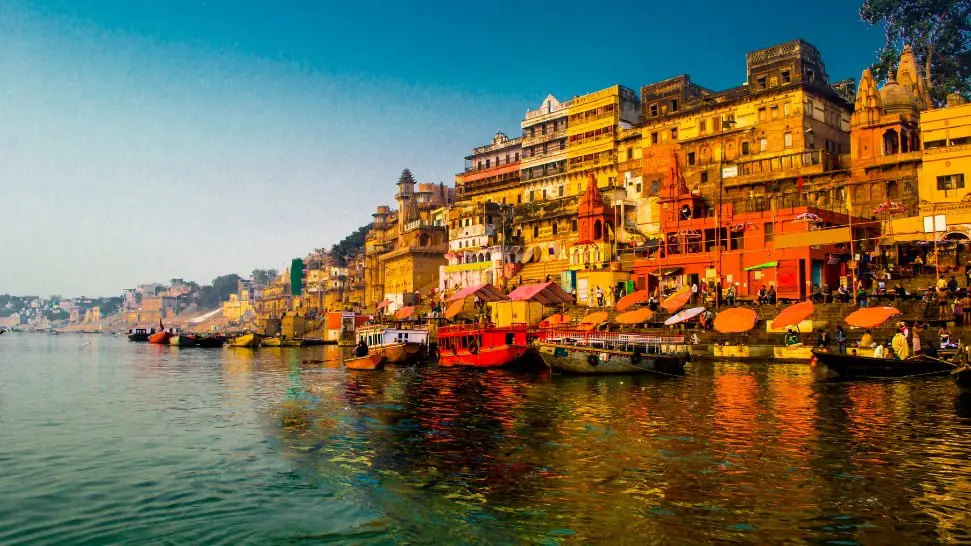
Manikarnika marks the place where Sati’s earring fell, very close to the sacred Manikarnika cremation ghat in Varanasi. Scholars see this ghat as a symbol of freedom — of the endless cycle of life, death, and rebirth. Devotees believe that asking for the Goddess’s blessings here brings spiritual freedom and lasting inner peace.
33. Shriparvata, Andhra Pradesh
Shriparvata is connected to the fall of the eyes of Sati. This is one of the oldest sacred sites of the Goddess and is widely respected. People believe that praying here gives clear inner vision, wisdom, and protection. The divine energy here is often connected with spiritual awakening and self-discovery.
34. Ratnavali, Hooghly, West Bengal
Ratnavali is the place where the right hand of Sati is believed to have fallen. The temple is in a calm and natural setting that feels spiritually uplifting. Pilgrims come here to find courage, let go of heavy burdens, and seek divine guidance.
35. Chhinnamasta, West Bengal
Chhinnamasta is where the crown of Sati’s head is believed to have been found. The Goddess is worshipped here in a headless form, which stands for self-sacrifice, letting go, and inner transformation. This Peeth has special importance in Tantric traditions and is a powerful place of worship.
36. Chandrabhaga Devi Temple, Gujarat
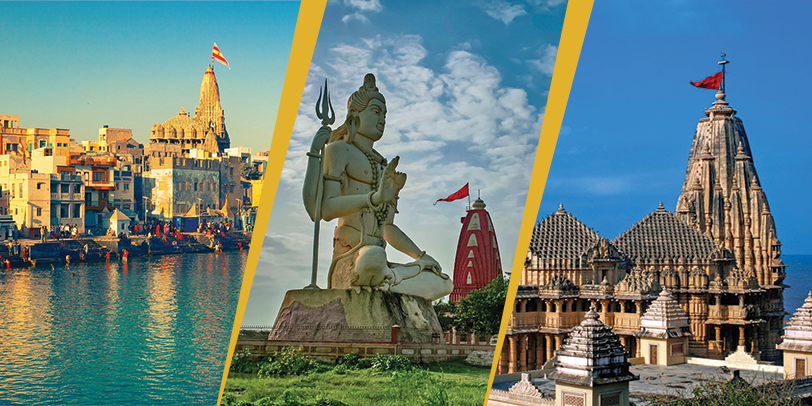
This Peeth — also known as Prabhas — is connected to the fall of Sati’s stomach. It stands next to the famous Somnath temple, a place full of mythological meaning. Devotees visit here to seek purification, inner strength, and the fulfilment of wishes. The calm seaside setting helps with meditation and quiet reflection. Prabhas is also linked to the stories of Lord Krishna and the Yadava family.
37. Shuchi, Kanyakumari
Shuchi is where the upper teeth of Sati are said to have fallen. It is at the very southern tip of India, where three oceans meet — giving it a very strong spiritual atmosphere. People come here to seek purity, mental clarity, and divine guidance. The beautiful meeting of nature and ancient tradition makes this a symbol of calm and holiness for those seeking inner peace.
38. Ramgiri, Chitrakoot
The Ramgiri Shakti Peeth is connected with Chitrakoot, on the border of Madhya Pradesh and Uttar Pradesh. This is the place where the right breast of Goddess Sati is believed to have fallen. The Goddess is worshipped here as Shivani (or Sharada Devi in some traditions), alongside Chand Bhairav — a form of Shiva. This place is also considered holy because of its connection to the forest exile of Lord Rama.
39. Yugadya, Kshirgram, West Bengal
Yugadya is the place where the right thumb of Sati is believed to have fallen. This is an important Tantric temple where devotees pray for the granting of wishes, protection, and positive change in their lives. The rituals here are said to build spiritual discipline. The peaceful setting combined with traditional religious practices makes this a place of deep spiritual value.
40. Vibhas, West Bengal
Vibhas marks the place where the left ankle of Sati fell. People come here who are looking for emotional balance and relief from inner pain. The temple rituals focus on healing and renewal. Its location near the coast gives it a peaceful beauty that helps visitors relax, reflect, and connect with the divine.
41. Brajeshwari Devi Temple, Himachal Pradesh
This temple marks the place where the ears of Sati fell. The Brajeshwari temple is well known for its healing powers. Traditional rituals here include anointing the idol with butter as a sign of devotion and purity. Devotees come to ask for better communication, clarity of mind, and calmness. The Himalayan landscape around the temple makes the spiritual experience even more powerful.
42. Shankari, Trincomalee, Sri Lanka
The Shankari Peeth — connected to the groin of Sati — sits on a high cliff above the sea at Trincomalee, Sri Lanka. This holy place represents strong feminine power, linked to creation and transformation. Thousands of devotees visit for harmony, protective blessings, and spiritual awareness. The stunning sea view adds an aura of mystery and holiness to this sacred site.
43. Vimala, Puri, Odisha
The Vimala temple is inside the famous Jagannath Temple complex in Puri. The feet of Sati are said to have fallen here. Vimala Devi is one of the most important Shakti goddesses in Odisha, and her presence is deeply connected with the worship of Lord Jagannath. Pilgrims believe that visiting both Vimala Devi and Lord Jagannath together brings complete spiritual merit.
44. Bhairavi, Chikmagalur, Karnataka
The Bhairavi temple in Chikmagalur, Karnataka, marks the spot where the anklet of Sati fell. Set among the peaceful hills and forests of Karnataka, this temple has a calm and powerful spiritual energy. Devotees come here to ask for protection, remove obstacles, and connect deeply with the divine feminine.
45. Chamundeshwari, Mysore, Karnataka
The Chamundeshwari temple is on top of Chamundi Hill in Mysore, Karnataka. The hair of Sati is said to have fallen here. Goddess Chamundeshwari is a fierce and powerful form of Durga, famous for defeating the demon Mahishasura. This is one of the most visited temples in South India, especially during the famous Mysore Dasara festival.
46. Madhaveswari, Prayagraj, Uttar Pradesh
This Shakti Peeth is near the Triveni Sangam in Prayagraj — the holy meeting point of three rivers: Ganga, Yamuna, and the invisible Saraswati. The fingers of Sati are said to have fallen here. This site is deeply rooted in Vedic tradition and is visited by huge numbers of pilgrims, especially during the Kumbh Mela.
47. Danteshwari, Chhattisgarh
The Danteshwari temple in Chhattisgarh marks the place where the teeth of Sati fell. Goddess Danteshwari is the ruling deity of the Bastar region and is deeply loved by local communities. This is one of the most important temples in central India and attracts large pilgrimages, especially during Navratri.
48. Varahi, Puri, Odisha
The Varahi temple in Puri marks the spot where the lower teeth of Sati fell. Goddess Varahi is a fierce form of Shakti and one of the seven divine mother goddesses (Sapta Matrikas). Devotees come early in the morning for darshan and to seek the protective blessings of the Goddess.
49. Jaydurga, Jharkhand
The Jaydurga temple in Jharkhand is the place where the heart of Sati is said to have fallen. This is a deeply important pilgrimage site in eastern India. Devotees come here to ask the Goddess for courage, strength, and protection from harm. The temple has strong, vibrant energy — especially during major Hindu festivals.
50. Manibandh, Pushkar, Rajasthan
Manibandh is in Pushkar, Rajasthan — believed to be the place where the wrist of Sati fell. Pushkar itself is one of the holiest towns in Hinduism, home to the famous Brahma Temple and the sacred Pushkar Lake. Visiting Manibandh along with the other holy sites of Pushkar makes for a very fulfilling spiritual journey.
51. Srisailam, Andhra Pradesh
Srisailam in Andhra Pradesh is believed to be the place where a part of Sati’s head fell. This is also the location of the Mallikarjuna Jyotirlinga — one of the twelve most sacred Shiva temples in India. Because this place has both a Shakti Peeth and a Shiva Jyotirlinga, Srisailam is seen as a place of extraordinary divine power. Thousands of pilgrims visit every year, especially during Maha Shivaratri and Navratri.
Frequently Asked Questions about 51 Shakti Peethas in India
1. What are the 51 Shakti Peethas in India?
The 51 Shakti Peethas are sacred Hindu temples built at the places where the body parts of Goddess Sati fell. Famous ones include Kamakhya (Assam), Jwala Ji (Himachal Pradesh), Vishalakshi (Varanasi), Mahalakshmi (Kolhapur), and Srisailam (Andhra Pradesh).
2. Where are these Shakti Peethas located?
They are spread across India in states like Uttar Pradesh, West Bengal, Maharashtra, Karnataka, Tamil Nadu, Odisha, Himachal Pradesh, Gujarat, and Telangana. Some are also in nearby countries like Nepal, Bangladesh, Sri Lanka, and Pakistan.
3. Why should one visit these Shakti sites?
These are believed to be powerful centres of the Goddess’s energy and blessings. People visit for strength and protection. The best times to go are Navratri and Durga Puja.
4. What rituals are done at these temples?
Common rituals include offering flowers and sweets, lighting lamps, praying, and in some temples, tying sacred threads and making wishes.
5. When is the best time to visit?
Navratri is the most popular time. Other good times include Durga Puja, Diwali, and Chaitra Navratri.
6. Will we see the same idol of Sati Mata at every temple?
No. Each Shakti Peeth worships a different form of the Goddess. The name, appearance, and rituals are different at each temple.
7. Which are the most visited Shakti Peethas?
The most popular ones include Kamakhya (Assam), Jwala Ji (Himachal Pradesh), Vishalakshi (Varanasi), Mahalakshmi (Kolhapur), and Srisailam (Andhra Pradesh).
8. How can I reach Mithila Shakti Peeth from Bihar?
You can fly to Patna from Delhi’s IGI Airport. From Patna, you can take a bus or train to reach the site.
Planning a spiritual trip to the Shakti Peethas? TravelShine can help you plan a smooth and meaningful pilgrimage. Explore our spiritual travel packages today.